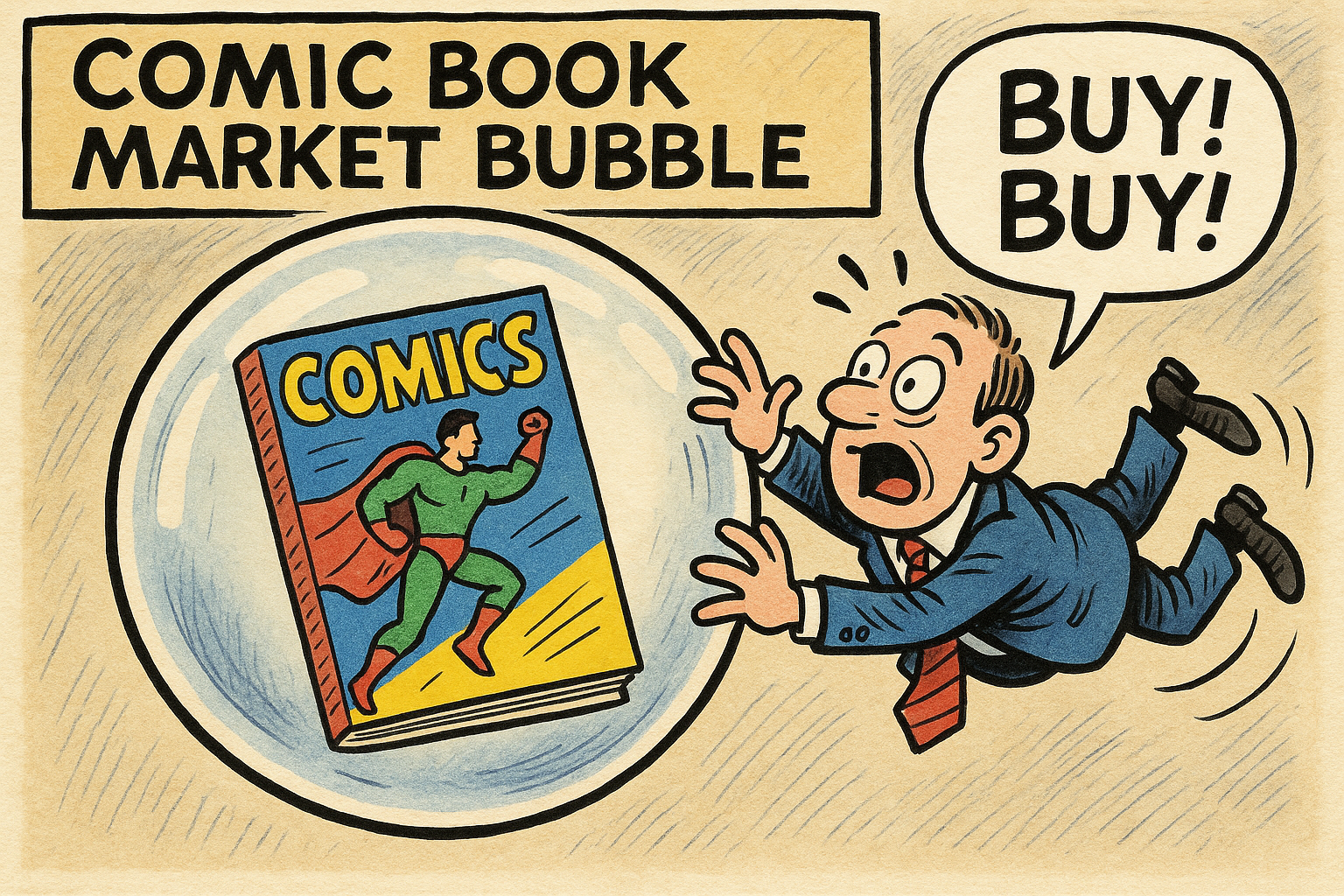
The four most dangerous words in investing are: 'This time it's different.' Comic markets are no exception.
The comic book market has seen dramatic price swings throughout its history. For collectors and investors, understanding when prices are artificially inflated—and likely to crash—can be the difference between a profitable collection and costly mistakes. This guide will help you identify the warning signs of comic book price bubbles before they burst.
What Is a Comic Book Price Bubble?
A price bubble occurs when speculation drives the value of comics far beyond their intrinsic worth or historical valuation patterns. Eventually, reality catches up, and prices crash back to reasonable levels—often leaving late buyers with significant losses.
Bubble Definition
A comic bubble exists when prices increase 100%+ within 6-12 months primarily driven by speculation rather than collector demand or genuine scarcity.
Historical Comic Bubble Examples
Before discussing how to spot current bubbles, let’s look at some historical examples:
The Speculation Bubble of the 1990s
The early 1990s saw perhaps the most famous comic bubble, characterized by:
- Publishers flooding the market with “collector’s editions” and “#1 issues”
- Gimmick covers (holographic, die-cut, multiple variants)
- Artificially limited print runs marketed as “investments”
- Comic shops opening at an unsustainable rate
1990s Bubble Impact
When the 1990s bubble burst, approximately 2/3 of all comic shops in North America closed, and many titles lost 90% or more of their market value.
When this bubble burst around 1993-1994, many comics lost 90% or more of their value. Even today, most comics from this era are worth less than their original cover price.
The MCU Anticipation Bubble (2008-2012)
MCU Speculation Example
The first appearance of Guardians of the Galaxy (1969) was a $20 comic before MCU speculation. It peaked at $850 after rumors of a film, then crashed to $120 when the movie used the modern team instead. The same pattern has repeated with dozens of characters.
Following Iron Man’s success, many investors began speculating on which characters might appear in future films:
- First appearances of obscure characters skyrocketed in price
- Books rumored for adaptation saw 400-500% increases almost overnight
- When characters didn’t appear as expected or performed poorly, prices collapsed
Warning Signs of a Comic Book Bubble
The easiest person to fool is yourself. As collectors, we must be vigilant against the euphoria that comes with rapidly rising prices.
Now let’s explore the key indicators that suggest current comic prices may be in bubble territory:
1. Rapid Price Appreciation Without Fundamental Support
When comic prices double or triple within months without significant news (like confirmed movie appearances or genuine scarcity discoveries), be cautious. Healthy price growth in collectibles typically happens gradually.
Warning Signs:
- Books jumping 300%+ in price within 3-6 months
- Multiple comics from the same era/series/creator all rising simultaneously
- Price increases primarily in raw (ungraded) copies with questionable condition
2. Speculation-Driven Rather Than Collector-Driven Buying
When buyers’ primary goal is quick profit rather than collecting, it’s often a bubble indicator.
Speculator Behavior
True speculators typically purchase multiple copies of the same issue and often have no interest in reading the content—only in the potential financial return.
Warning Signs:
- People buying multiple copies of the same book
- New market entrants with no collecting background or interest
- Social media “investment gurus” promoting specific books
- Buyers unfamiliar with comic grades, history, or significance
3. Disconnect Between Different Comic Grades
In a healthy market, there’s a consistent price relationship between different grades of the same comic. In bubbles, this relationship breaks down.
Warning Signs:
- Mid-grade copies selling for nearly the same price as high-grade copies
- Raw copies selling for close to certified/graded prices
- Price gaps between consecutive grades becoming exaggerated (e.g., 9.4 to 9.6 price difference greater than the 9.2 to 9.4 difference)
4. Media Hype Cycles
When mainstream media starts covering comic “investments,” it often signals a market top.
Warning Signs:
- Non-comic news outlets running stories about comic investing
- Social media celebrities showcasing comic purchases
- Auction houses heavily marketing comic sales to new audiences
- Investment-focused language overtaking collector terminology
5. New Collector Influx Without Education
Every healthy market needs new participants, but bubbles often feature uninformed new buyers.
New Collector Red Flags
When a significant percentage of new market participants are primarily focused on investment returns rather than understanding the hobby itself, bubble conditions often develop.
Warning Signs:
- Forums flooded with basic questions about storage, grading, etc.
- High-value books selling to buyers who don’t understand conservation
- New collectors immediately focusing on “key issues” rather than building knowledge
- Significant uptick in restoration and cleaning services
Protecting Your Collection From Bubbles
If you suspect we’re in a bubble, consider these protective strategies:
1. Focus on Blue-Chip Comics
Comics with decades-long track records of value retention tend to be less volatile:
- Golden Age keys (Action Comics, Detective Comics, etc.)
- First appearances of enduring characters (Spider-Man, X-Men, etc.)
- Historically significant issues (first Silver Age comic, etc.)
2. Sell Into Strength
If you own comics experiencing bubble-like price increases, consider:
- Selling duplicates
- Trading up (selling multiple hyped books to buy one blue-chip book)
- Taking profits on books you don’t have strong personal attachment to
3. Buy Counter-Cyclically
Contrarian Strategy
The best time to buy previously hot comics is when nobody is talking about them anymore. The same comics that experienced 90% price drops in the 1990s bubble eventually became valuable again—but only for patient collectors who bought during the downturn.
When everyone is chasing the same books, look at previously hot areas now being overlooked:
- Silver Age books during a Modern Age bubble
- Horror comics during a superhero bubble
- Artist-driven books during a character-driven bubble
4. Maintain a Collecting Philosophy
Collect what you love, and you'll never be disappointed by the market. The joy of ownership should always outweigh potential financial returns.
Collectors with clear goals weather bubbles better than trend-chasers:
- Collect what you genuinely enjoy
- Set clear parameters (e.g., complete runs, specific artists, themes)
- Value your collection for more than its financial worth
The Tabi App’s Market Analysis Tools
Our Tabi Collection Insights feature can help identify potential bubbles by:
- Tracking historical price patterns
- Comparing current prices to long-term trends
- Alerting you to unusual price movements
- Providing media correlation data to separate hype from substance
Final Thoughts
Remember that comic collecting should be enjoyable regardless of market conditions. The collector who buys what they love, at prices they can afford, will experience the most satisfaction—whether we’re in a bubble market or not.
Market cycles are inevitable, but with careful observation and disciplined buying habits, you can protect your collection from their worst effects while still enjoying the hobby.
Do you think we’re currently in a comic bubble? Share your thoughts in the comments section below!